
21 Results in the "Uncategorized" category
-
Chapter
12 — Firewalls
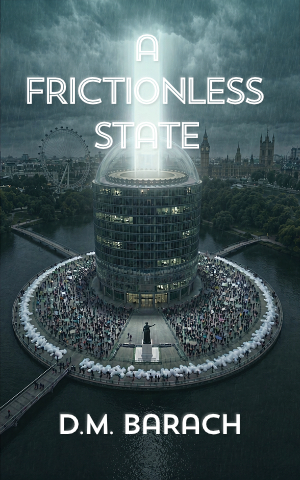 In the dominant economic models, purpose is an individualistic pursuit of passion and as such a net drain on societal resources. In a harmonised economy, purpose is redefined as the fulfilment of one's optimal function. The individual who is useful—the farmer, the manufacturer, the scientist—is the one who achieves true integration. It is only in serving our designated function that we find true economic and social peace. —Naomi Feld, The Collective Balance: An Introduction to Macro-Societal…
-
103.8 K • Ongoing
-
-
Chapter
13 — Deprecated
A common error of economic liberalism was the equation of morality with preservation. A rational economist understands that the preservation of the system is the highest moral good. To sacrifice a single component to ensure the function of the whole is not a failure of compassion; it is the ultimate expression of systemic utility. —Naomi Feld, The Economic Renewal Fallacy: A Theory of Replacement The phantom sensation of Santo's hand tearing from his grasp looped throughout Ari's fitful REM cycles…-
103.8 K • Ongoing
-
-
Chapter
14 — Degraded
A system does not become fragile when it can no longer act, it becomes fragile when it can justify anything. The moment emotion permits exceptions and derogations, utility ceases to discipline power and begins instead to excuse it. What follows may still call itself order, but it is no longer harmony. It is merely controlled deterioration. —Naomi Feld, Systemic Integrity and the Harmonious State Francis sat with her fingers interlaced in front of her on the council table. Councillor Ekwueme from…-
103.8 K • Ongoing
-
-
Chapter
15 — Interpreted
A balanced society must understand that trust is not the suspension of control, but its most efficient form. The most reliable component is not the one that feels loyalty, but the one whose available choices have been so carefully structured that loyalty and obedience become indistinguishable. Trust, in that sense, is not the absence of control. It is control made inexpensive. —Naomi Feld, The Collective Balance: An Introduction to Macro-Societal Utility The coffee had gone to cold sludge in a mug…-
103.8 K • Ongoing
-
-
Chapter
16 — Recompiled
Ambiguity is the engine of inefficiency. It is the social friction that slows allocation and causes the misdirection of resources. We must therefore strive to harmonise our social structures, and even our own identities, into defined, logical, and productive roles. An ambiguous actor, an unresolved identity, or an unclassified emotional state is, by its very nature, a source of economic friction. —Naomi Feld, The Frictionless Economy: Principles of Resource Allocation Alene stood in the doorway of…-
103.8 K • Ongoing
-
-
Chapter
17 — Decrypted
The ultimate hubris of centralised planning is the belief that the planners themselves are infallible. A truly self-correcting system must have protocols to protect itself not just from external shocks, but from the rational, well-intentioned, and catastrophic errors of its own leadership. —Naomi Feld, Systemic Integrity and the Harmonious State Benjamin sat on the tall stool in the workshop in what he now thought of as Ari's corner. He'd been coming here since the Gathering. Since Ari and…-
103.8 K • Ongoing
-
-
Chapter
18 — Data
Rational self-interest presumes a desire for preservation. Vengeance discards this premise entirely. It is the rapid, uncontrolled liquidation of an asset's total future value to purchase a single moment of destruction. In this state, the economic actor ceases to be a productive component and becomes a kinetic projectile. It is a transaction where the final cost of the purchase is the purchaser themself. —Naomi Feld, The Liability of Emotion: Human Factors in Economic Collapse The chime at the…-
103.8 K • Ongoing
-
-
Chapter
19 — Collected
In periods of acute instability, the decisive question is rarely who possesses clean hands. It is who remains capable of binding disparate actors into temporary coherence before fracture becomes irreversible. A rational system must sometimes accept contaminated alliances, partial knowledge, and compromised instruments, provided they are subordinated to the preservation of the whole. —Naomi Feld, Systemic Integrity and the Harmonious State Francis rested her fingertips on the walnut and boxwood…-
103.8 K • Ongoing
-
-
Chapter
21 — Junction
A closed system cannot tolerate accumulation. Just as a biological organism must excrete toxins to survive, a healthy economic body must have efficient mechanisms for the disposal of non-productive elements. We must not view this expulsion as cruelty, but as a necessary hygiene. The system must be flushed to remain pure. —Naomi Feld, The Economic Renewal Fallacy: A Theory of Replacement The door marked Junction 44 was unlocked. Ari pushed it open. Inside he found a small, circular maintenance hub,…-
103.8 K • Ongoing
-