
22 Results in the "Uncategorized" category
-
Chapter
12 — Firewalls
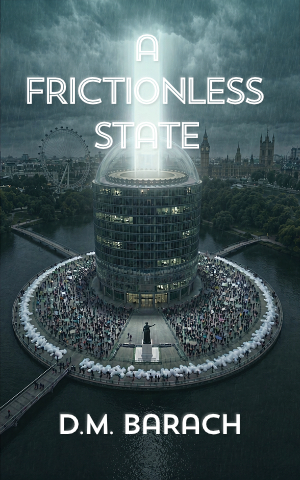 In the dominant economic models, purpose is an individualistic pursuit of passion and as such a net drain on societal resources. In a harmonised economy, purpose is redefined as the fulfilment of one's optimal function. The individual who is useful—the farmer, the manufacturer, the scientist—is the one who achieves true integration. It is only in serving our designated function that we find true economic and social peace. —Naomi Feld, The Collective Balance: An Introduction to Macro-Societal…
-
111.8 K • Ongoing
-
-
Chapter
05 — Routed
People often confuse transparency with truth. They are not the same. No institution can function if it is forced to present every contradiction, every cost, and every unfinished decision all at once. Public trust depends as much on coherence as on disclosure. The question is not whether information is managed, but whether it is managed in service of the many or in service of private power. —Naomi Feld, The Collective Balance: An Introduction to Macro-Societal Utility Sleep came in thin increments,…-
111.8 K • Ongoing
-
-
Chapter
04 — Access Denied
Capitalist societies romanticise the individual who takes matters into their own hands. They call this initiative, or innovation. In fact, such an individual is interfering with a systemic solution and undermining confidence in a system's inherent reliability. A healthy society must depend on an implicit trust in its systemised responses, not sporadic personal intervention. It requires shared standards, coordinated response, and the confidence that no individual should solve a collective problem…-
111.8 K • Ongoing
-
-
Chapter
09 — Core
The greatest threat to a harmonious system is not open rebellion, but private misalignment. An individual may continue to perform their assigned function, speak the approved language, and move within the prescribed channels, yet still become destabilising if they permit grief, suspicion, or personal dissatisfaction to supersede trust in the whole. Systemic failure begins as a minor divergence in perception long before it manifests as material disorder. —Naomi Feld, The Frictionless Economy: Principles…-
111.8 K • Ongoing
-
-
Chapter
07 — Requirements
The economic models of our day are trapped in a cycle of dysfunction, obsessed with the three Rs of ruin. They are repair, reform and renewal. To mend a non-functional unit is to celebrate its idiosyncrasy. It is an act of sentiment, not economics. This sentimental attachment to flawed, unique objects is the same thinking that leads to nationalism and individualism. A truly rational economic system does not tolerate such aberrations, it demands standardisation. It replaces the non-functional unit to…-
111.8 K • Ongoing
-
-
Chapter
06 — Conditional
A common critique of a fully planned economy is its hubris. We build our harmonious structures over the ruined foundations of the past, believing our new logic has erased the old. But the physical history, the forgotten infrastructure, the abandoned means of production and logistics, the lived in places—those always remain. We must remember that these spaces are not just historical artefacts, but ungoverned territories. And in any ungoverned territory, the brutal, inefficient, and primal economies of raw…-
111.8 K • Ongoing
-
-
Blog
A Return Address
I sent the first three chapters out on a Thursday in April. A few hundred people I knew got a personal email from me, people who would open it because they recognised my name in the subject line. Whether they’d read it I had no way to know. What I’m actually waiting for, though, are the moments when strangers arrive at the site with…
-
When I decided to adapt Utopia, the screenplay I had written in 1996, into a novel, I expected the challenges to be structural—updating the story for the intervening decades, expanding the world, converting a screenplay into prose. I didn’t expect to discover how much the form itself would change what the story was able to be. Utopia had qualities worth keeping. It moved. It…
-
I’d been having so much fun and frustration writing A Frictionless State, including many nights when I couldn’t stop writing in my head when I should have been sleeping. There was just one problem. I am an unknown novelist asking strangers to trust me with their time. How I addressed that challenge shaped everything about how I decided to publish. The traditional approach is:…
-
In 2000, I finished an MA in fiction writing at Johns Hopkins University and did the next most logical thing. I built a software company. The internet was new and exciting at that time, and I had a problem at my nonprofit marketing job that I knew the internet could solve. How do you connect people who care about the same causes and help…
- Previous 1 2 3 Next