The Kind of Readers I’m Hoping to Find
There is a kind of reader who reads fiction not to have their existing judgments confirmed but to test them. Someone willing to stay inside moral complexity long enough to understand it, rather than resolving it quickly into a verdict. If you’ve read N.K. Jemisin’s The Fifth Season and felt unsettled for days, or read Frank Herbert’s Dune as a study in how power rolls and shifts, or read Octavia Butler’s Kindred and found it harder to be comfortable afterward—you’re probably the kind of reader I wrote this for. That’s not exclusion. It’s calibration.
A Frictionless State is a literary speculative novel, a genre that may not have its own section in your local bookstore, but names something genuine — fiction that uses an invented world to put pressure on questions the real one hasn’t resolved. That distance from real institutions and history lets readers examine what they actually think without the defensive shorthand that comes with familiarity. This novel explores what it means to do the most beneficial thing when beneficial and right are not the same.
Armchair ethicists, those who judge characters operating under conditions their own circumstances were designed to avoid, will find this novel unaccommodating.
There are no clean hands in this novel. The reader I’m hoping to find is comfortable with that kind of discomfort.
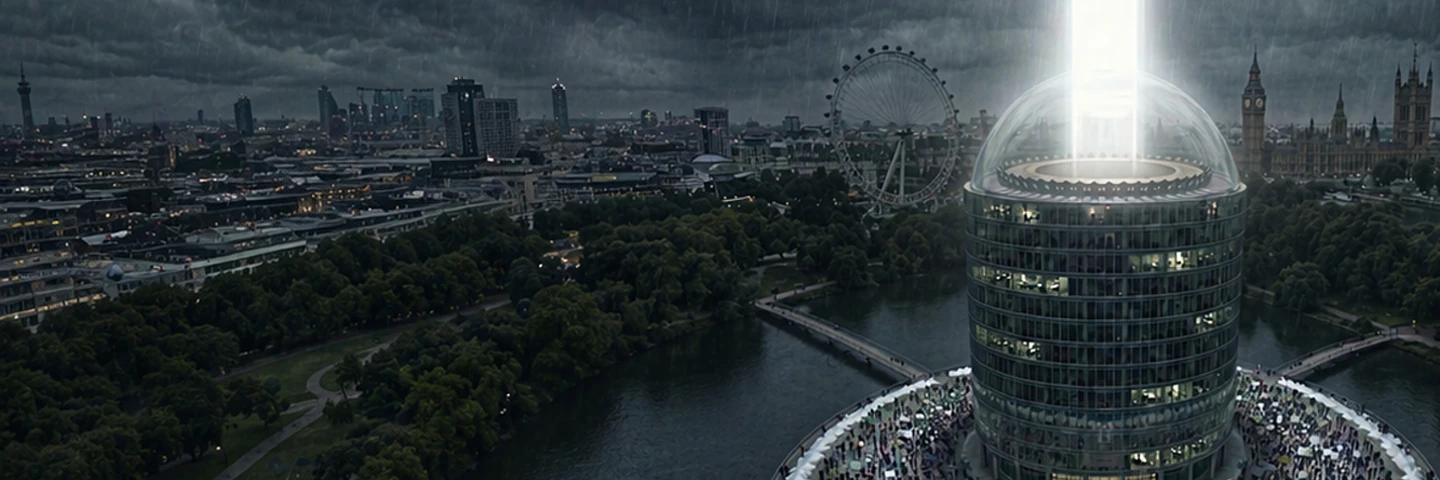
The characters in A Frictionless State are operating inside circumstances where the options are consistently bad or worse, where the right thing to do is often illegible until it’s too late, and they have to live with what they decide. Systems designed to preserve stability are themselves implicated in the harm they were built to prevent. The world-building supports this. The Council of Global Stability, the governing system of 2074, has its own logic, history, and contradictions. You don’t need to understand all of it immediately, but it rewards the reader who treats it as a character driver rather than a backdrop.
There are also pleasures here that aren’t only intellectual. The novel has real tension at its centre, driven by a plot involving investigation, pursuit, and consequence. It has political manoeuvring and an underclass. Characters have relationships that shift and press against one another in ways that won’t always resolve cleanly. Other writers who influenced me—Chabon, Kingsolver, McCarthy, Gaiman, Card—didn’t treat enjoyment and challenge as opposing values, and neither do I. You’ll be engaged. I take that seriously. The point is that the engagement asks of you as much as it gives.
The novel moves at the pace of a literary novel, not a commercial thriller. The first chapter ends without a single explosion. The early chapters establish character and world before the investigation opens fully. If you’re willing to let that unfold rather than push through it, the accumulation matters. Certain scenes that seem only atmospheric early on turn out to be structural. Readers who pay close attention to what characters don’t say will understand the ending differently from those who don’t.
The novel ends with satisfying plot resolutions, but the core moral questions don’t resolve. If you finish it wanting a definitive verdict on who was right, you may be frustrated. If you finish it wanting to argue about it—with someone else, with yourself, I’d call that a win for both of us.
Start with Chapter One → or send A Frictionless State to one reader you know would engage with it.