
Chapters
-
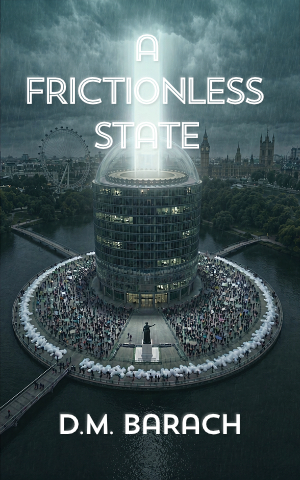 A balanced society must understand that trust is not the suspension of control, but its most efficient form. The most reliable component is not the one that feels loyalty, but the one whose available choices have been so carefully structured that loyalty and obedience become indistinguishable. Trust, in that sense, is not the absence of control. It is control made inexpensive. —Naomi Feld, The Collective Balance: An Introduction to Macro-Societal Utility The coffee had gone to cold sludge in a mug…
-
111.8 K • Ongoing
-
-
A system does not become fragile when it can no longer act, it becomes fragile when it can justify anything. The moment emotion permits exceptions and derogations, utility ceases to discipline power and begins instead to excuse it. What follows may still call itself order, but it is no longer harmony. It is merely controlled deterioration. —Naomi Feld, Systemic Integrity and the Harmonious State Francis sat with her fingers interlaced in front of her on the council table. Councillor Ekwueme from…
-
111.8 K • Ongoing
-
-
The primary failing of the 20th and early 21st century economic models was their obsession with growth over equilibrium. They produced more than any in history, yet this very abundance was the engine of its chaos. When one economic actor possesses a gross surplus while another suffers a structural deficit, the system is primed not for trade, but for conflict. The only path to a lasting peace is the total elimination of want, and this cannot be achieved by creating more; it must be achieved by enforcing…
-
111.8 K • Ongoing
-
-
In the dominant economic models, purpose is an individualistic pursuit of passion and as such a net drain on societal resources. In a harmonised economy, purpose is redefined as the fulfilment of one's optimal function. The individual who is useful—the farmer, the manufacturer, the scientist—is the one who achieves true integration. It is only in serving our designated function that we find true economic and social peace. —Naomi Feld, The Collective Balance: An Introduction to Macro-Societal…
-
111.8 K • Ongoing
-
-
Any large-scale economic disruption, whether it be an environmental disaster, a supply chain collapse, or a public health crisis, is not merely a logistical problem to solve. The core danger of the situation is that disaster invites a crisis of narrative. The public's faith in the economic system is its primary asset. In such moments, the greatest danger is the political entrepreneur who views the disruption as a vacuum of authority to be exploited. Such individuals do not seek to restore equilibrium. They…
-
111.8 K • Ongoing
-
-
A truly interdependent economy cannot function if it permits unaffiliated economic actors. A community that exists off-grid, whether as an expression of freedom or dissent, is in fact a structural liability. By drawing resources from the whole without contributing to the managed equilibrium, such groups reintroduce the very principles of scarcity and hoarding that Interdependency was designed to eliminate. They are, by definition, an economic threat. —Naomi Feld, Interdependency: A New Economic…
-
111.8 K • Ongoing
-
-
The greatest threat to a harmonious system is not open rebellion, but private misalignment. An individual may continue to perform their assigned function, speak the approved language, and move within the prescribed channels, yet still become destabilising if they permit grief, suspicion, or personal dissatisfaction to supersede trust in the whole. Systemic failure begins as a minor divergence in perception long before it manifests as material disorder. —Naomi Feld, The Frictionless Economy: Principles…
-
111.8 K • Ongoing
-
-
Liberal societies waste vast capital on sentimental gestures, such as protections for social identities or the preservation of non-productive individuals. A rational economy, however, views its populace as an asset. Like any asset, its value must be weighed. Who can still contribute? Which losses can be prevented, and which are necessary? A just society is not one that spends endlessly on compassion, but one that refuses to make allocation decisions it cannot sustain. —Naomi Feld, The Liability of…
-
111.8 K • Ongoing
-
-
The economic models of our day are trapped in a cycle of dysfunction, obsessed with the three Rs of ruin. They are repair, reform and renewal. To mend a non-functional unit is to celebrate its idiosyncrasy. It is an act of sentiment, not economics. This sentimental attachment to flawed, unique objects is the same thinking that leads to nationalism and individualism. A truly rational economic system does not tolerate such aberrations, it demands standardisation. It replaces the non-functional unit to…
-
111.8 K • Ongoing
-
-
A common critique of a fully planned economy is its hubris. We build our harmonious structures over the ruined foundations of the past, believing our new logic has erased the old. But the physical history, the forgotten infrastructure, the abandoned means of production and logistics, the lived in places—those always remain. We must remember that these spaces are not just historical artefacts, but ungoverned territories. And in any ungoverned territory, the brutal, inefficient, and primal economies of raw…
-
111.8 K • Ongoing
-
- Previous 1 2 3 Next